
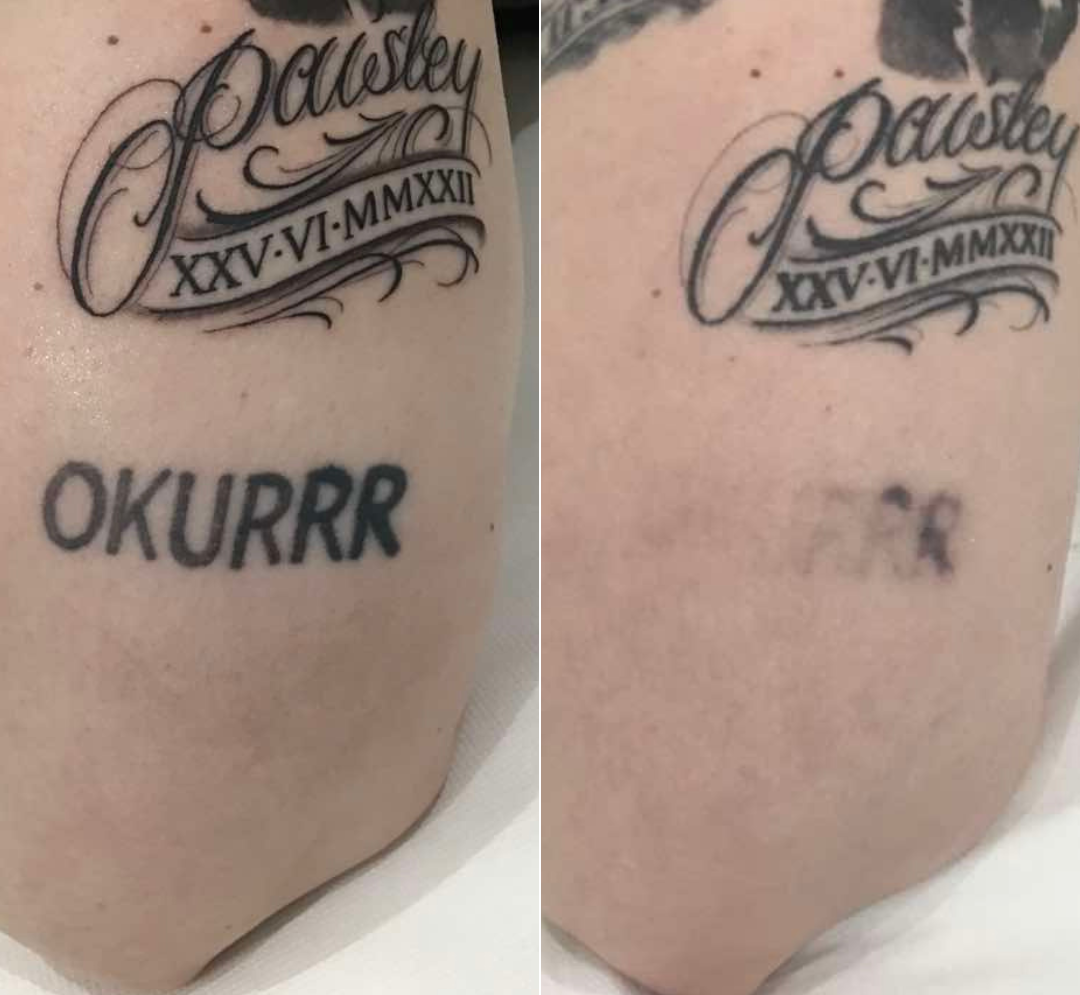
Laser tattoo removal can help significantly fade unwanted tattoo ink, with some tattoos achieving very substantial clearance over a course of treatments. However, the process doesn’t end when your appointment does. The healing period between treatments is an important part of the tattoo removal journey.
Understanding How Tattoo Removal Works
Laser tattoo removal uses highly concentrated pulses of light to target tattoo pigment within the skin. The laser energy is absorbed by the ink particles, breaking them down into much smaller fragments.
Once the pigment has been fragmented, your body’s natural processes help gradually clear these particles over time. This is one of the reasons tattoo removal requires multiple sessions, your skin and body need time between treatments to heal and process the fragmented ink.
The number of treatments required varies from person to person and can depend on factors such as the colour, depth and density of the ink, the age and location of the tattoo, whether it is a cover-up, and how your individual skin responds to treatment.
What to Expect During Your Session
During a laser tattoo removal treatment, there are several normal reactions you may notice as the laser targets the tattoo pigment.
One of the most common is laser frosting, where the skin temporarily develops a white or frosted appearance immediately after the laser passes over the tattoo. This is a normal response to the laser energy interacting with the tattoo pigment.
Many clients describe the sensation as similar to a rubber band snapping against the skin. Treatment times vary depending on the size and location of the tattoo, but smaller tattoos can often be treated within just a few minutes.
For larger or more sensitive areas, cooling methods such as ice packs may be used to help provide additional comfort during treatment.
It is also normal to experience some redness, swelling, warmth or mild tenderness in the treated area. You may occasionally hear small popping sounds during treatment as the laser interacts with the tattoo pigment.
These responses are expected following treatment and form part of the skin’s normal response to laser tattoo removal.
Once your treatment is complete, a thin layer of aftercare cream will be applied to help soothe and protect the treated area. A waterproof dressing may also be applied to protect the skin while it begins to heal.
What to Expect During the Healing Process
Day 0–1: Immediately After Treatment
The treated area may appear red, swollen or tender, and the skin may temporarily have a white or “frosted” appearance.
Aftercare cream and a protective dressing will be applied following your treatment. Follow the specific aftercare instructions provided by your therapist.
Day 2–3: Early Healing
Redness, tenderness and warmth may continue, and the area may feel slightly itchy as the skin begins to heal.
The dressing should be changed as directed. If the area becomes sweaty or dirty, it may need to be changed more frequently.
Gently cleanse the area using the recommended antibacterial wash and apply your recommended aftercare cream as instructed.
Day 4–7: Scabbing & Peeling
Small scabs, blisters or areas of peeling may develop as the skin repairs itself. These can be a normal part of the healing process.
It is important not to pick, scratch or peel the treated area, as this can interfere with healing and increase the risk of complications such as scarring or infection.
Week 2: Settling
Most redness and swelling should begin to settle during this stage. The skin may remain slightly sensitive, but the healing process is well underway.
Continue to keep the area clean and protected, and avoid unnecessary sun exposure.
Weeks 3–6: Ink Fading
As the skin continues to heal, the fragmented tattoo pigment is gradually cleared by the body’s natural processes.
You may begin to notice the tattoo becoming lighter during this period. However, fading continues over an extended period and varies between individuals.
Multiple treatments are generally required, with appropriate time between sessions to allow the skin to heal and the body to process the fragmented pigment.
How Many Tattoo Removal Sessions Will I Need?
There is no set number of treatments required for tattoo removal, as every tattoo responds differently.
Factors such as ink colour, depth, density, tattoo age, location, skin type and whether the tattoo is a cover-up can all influence the treatment process.
Rather than focusing on a specific number of sessions, our team will assess your tattoo and skin and provide realistic expectations about the fading process.
Treatments are spaced apart to allow your skin to heal and give your body time to naturally clear the fragmented pigment.
Why Can’t Treatments Be Done Closer Together?
Tattoo removal is a gradual process, and allowing adequate time between treatments is essential.
The laser breaks down the tattoo pigment during your appointment, but your body then needs time to process and clear the fragmented pigment.
Treating the area again too soon does not necessarily speed up the process and may interfere with the skin’s ability to heal properly.
Your therapist will advise you when the area is ready for your next treatment.
Can Every Tattoo Be Completely Removed?
Not every tattoo can be completely removed, and results vary from person to person.
Some tattoos respond very well to laser treatment, while others may leave residual pigment or a slight change in the appearance of the skin.
The goal of treatment is to achieve the greatest amount of fading possible while allowing the skin to heal appropriately.
During your consultation, we can assess your tattoo and discuss what may be realistically achievable.
Will Tattoo Removal Leave a Scar?
Laser tattoo removal is designed to target tattoo pigment while minimising damage to the surrounding skin. However, as with any treatment that affects the skin, there is a risk of temporary or, less commonly, longer-lasting changes such as pigmentation changes or scarring.
Following your aftercare instructions carefully is an important part of supporting healthy healing.
Why Is Sun Protection So Important?
Protecting the treated area from the sun is an important part of tattoo removal aftercare.
Recently treated skin can be more sensitive, and sun exposure can increase the risk of pigmentation changes during the healing process.
Keep the area covered where possible and follow your therapist’s advice regarding sun exposure and SPF during your treatment journey.
Things to Avoid During Healing
To support healthy healing, we recommend avoiding:
- Picking or scratching the treated area
- Removing scabs or peeling skin
- Excessive heat, including spas and saunas, while the area is healing
- Swimming until the area has adequately healed
- Excessive sun exposure
- Applying irritating or active skincare products to the treated area unless recommended
- Tight clothing that repeatedly rubs against the treated area
What Can Affect Tattoo Removal Results?
Several factors can influence how quickly and effectively a tattoo fades.
Ink colour – Darker pigments, particularly black, generally respond more readily to laser treatment. Some lighter colours, including certain shades of yellow, green, blue, purple and white, can be more challenging to treat and may require additional sessions or different laser wavelengths.
Ink depth and density – Tattoos with deeply deposited or heavily saturated pigment can take longer to fade because there is more ink for the laser to target.
Tattoo age – Older tattoos may sometimes respond differently to treatment than newer tattoos. The age of the tattoo is one of several factors that can influence the overall treatment process.
Scarring – If scar tissue is present within the tattoo, the pigment may be more difficult to target evenly, which can affect the response to treatment.
Cover-up tattoos – Cover-ups contain multiple layers of pigment, which can make removal more complex. Different pigments may respond differently to laser treatment, and additional sessions may be required.
Amateur tattoos – Amateur tattoos can contain pigment at varying depths and densities, making the response to treatment less predictable.
Location on the body – Tattoo location can influence the rate at which pigment clears. Areas with different levels of circulation and lymphatic activity may respond differently to treatment.
Individual response – Everyone responds differently to tattoo removal. Your body’s natural healing and pigment-clearing processes play an important role in how the tattoo fades between treatments.
Aftercare – Following your aftercare instructions carefully helps support healthy healing and reduces the risk of complications. Keeping the treated area clean, protecting it from the sun and avoiding picking or irritating the skin are all important during the healing process.
Tattoo Removal Is a Process, Not an Instant Fix
Tattoo removal is a gradual process that requires patience and consistency. Every tattoo responds differently, and there is no way to guarantee how much fading can be achieved or exactly how many sessions will be required.
Understanding what to expect during and after each treatment can help you feel more prepared and support healthy skin throughout your tattoo removal journey.
Ready to Start Your Tattoo Removal Journey?
Every tattoo and every skin is different. At The Skin Method, we take the time to assess your tattoo, skin and individual circumstances so we can create a treatment approach that is realistic and tailored to you.
If you’re considering tattoo removal, book a consultation with our team to discuss your options and find out what may be achievable for your tattoo.
Share
Related Posts
Glacé
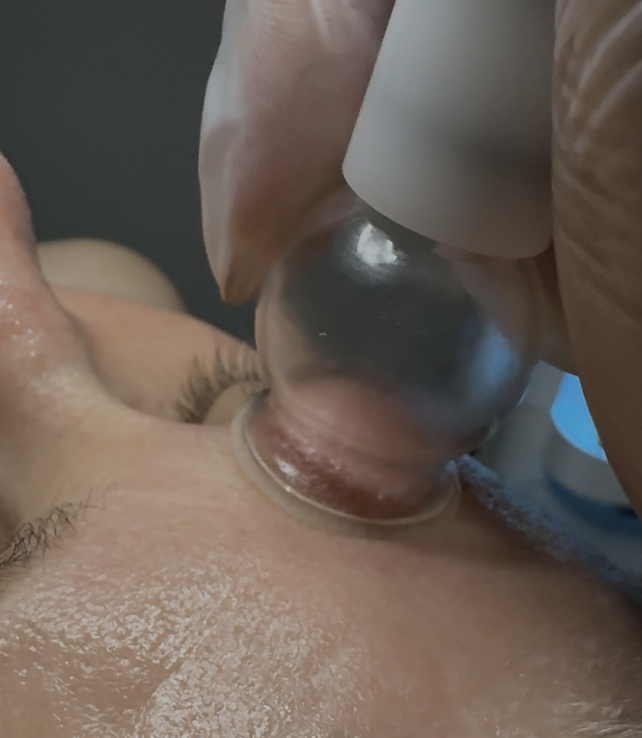
The reset facial with instant glow and zero downtime. Medical grade facial technology combining cupping, hydra microdermabrasion and LED. From $199
What We Love About Korean Skincare: Products & Treatments
Korean skincare has become one of the biggest movements in the global beauty industry, but its popularity goes far beyond trends and social media hype. At its core, Korean skincare is centred around skin health, [...]
What Happens After Tattoo Removal? Healing, Aftercare & Results
Laser tattoo removal can help significantly fade unwanted tattoo ink, with some tattoos achieving very substantial clearance over a course of treatments. However, the process doesn’t end when your appointment does. The healing period [...]